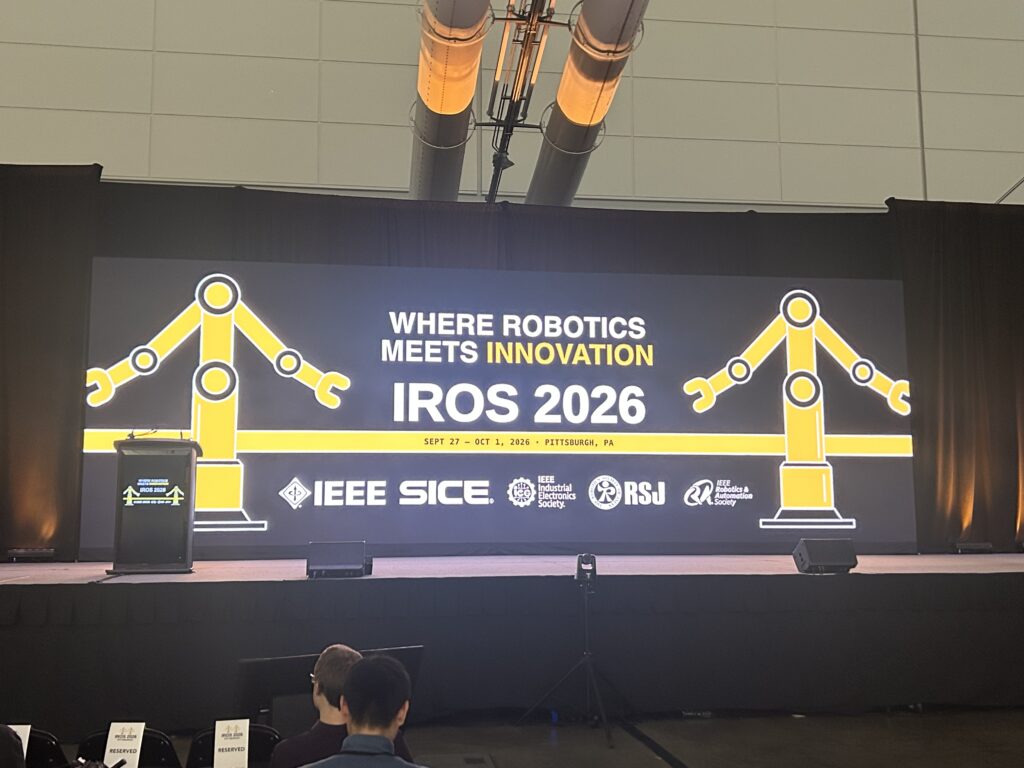
The International Conference on Intelligent Robots and Systems 2026 started today in Pittsburgh Pennsylvania in the USA. The conference opened up with the Chair Dr. Howie Choset sharing some impressive statistics.
For this year IROS has
- ~6,900 Attendees
- >$2M Exhibitions and Partnerships
- 3,970 Submitted Papers
- 1,580 Accepted papers (~40% acceptance rate)
- 7,063 Reviewers
- 688 Associate Editors
- 114 Submitted Workshops
- 86 Accepted Workshops
After the introduction I had the chance to attend a few talks on telerobotics and keeping humans in the loop. There were also sessions on
- Algorithms for Reliable Robot State Estimation
- Navigating the Body’s Inner Pathways
- Reinforcement Learning for Contact Rich Manipulaton
- Enforcing Safety in Learned Motion Planning
- Planning and Powering Underwater Motion
- Safe and Predictive Robot Navigation
- and many more.
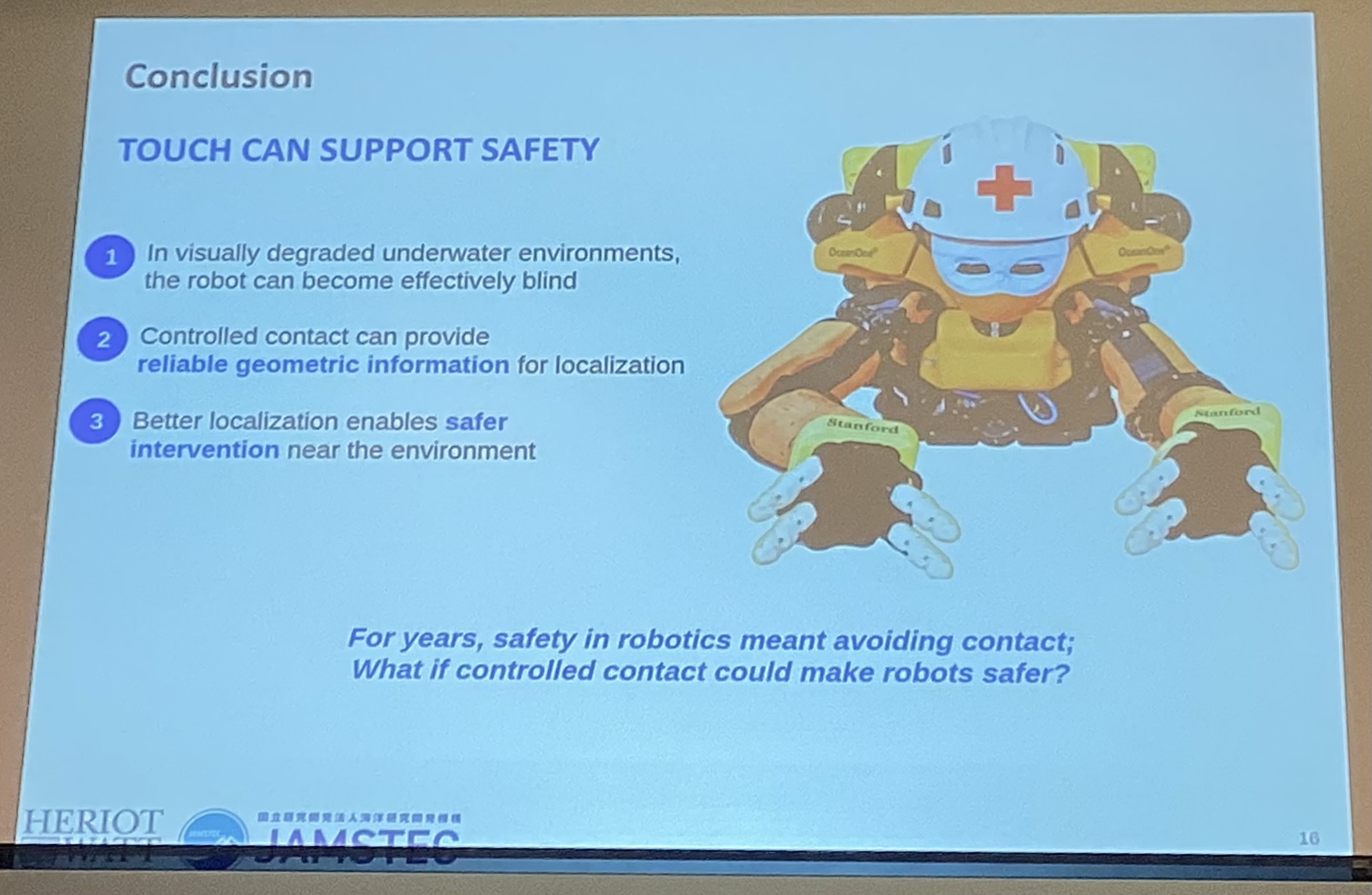
The first talk I attended was from Grimaldi, Michele, et al titled Contact-Aided Factor Graph Localization for Underwater Sampling. The thing I loved was how the first talk I attended brought me back 20 years to when bug algorithms and touching a wall were common. However now 20 years later these methods are used when more common (LIDAR, Cameras, etc..) sensors are no longer producing great data
After Lunch a Plenary Panel for Startup and Entrepreneurship was held.
We got to hear from pretty much every person on the panel about when going from prototype to product reliability is key. And how sometimes you need to step back and deliver a reliable product before you have a chance to put in all of your fancy technology.
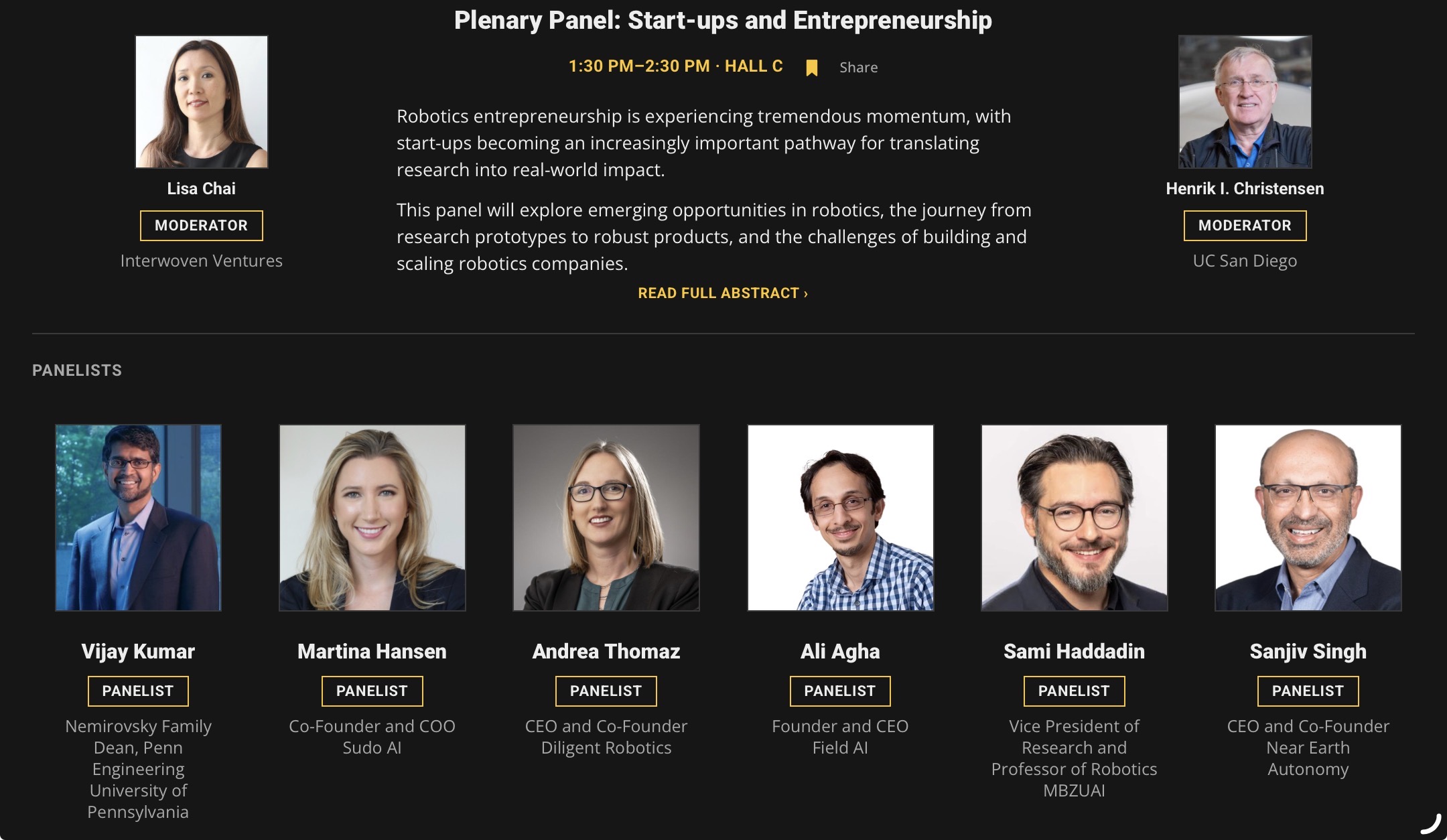
Sanjiv spoke about understanding how customers spend money, and that most will want to limit capital expenses and keep things as operating expenses. This makes billing difficult for the startup as you need to figure out how to charge and track by the mile, the pick, per kg, etc.. In order to do that you need to work with a few key early adopters who are willing to pay for the development of the technology where the economics are not the main driver.
Vijay recommended to find a paying customer before you even start the startup to help validate the business and that someone is actually willing to pay for the system and provide funding.
Martina mentioned how initially companies wanted to own the systems, but now are getting more comfortable and sometimes prefer paying as a service (per pick or similiar) as they have a lower risk and are spending less money to test the system.
Andrea added that you also need to figure out who is actually paying for the system. For example a nurse may use the software, but the CFO of a hospital is the real customer who is paying for it.
At the end of the talk someone in the audience asked a questions about being a Faculty member and also trying to start a business. Vijay responded with two points:
- You need someone that is 100% in. Either the CEO or the faculty founder. But somebody needs to step up.
- Ideally a founding team has a deep technical person, and a deep business person that is ideally from the industry that you are trying to penetrate.
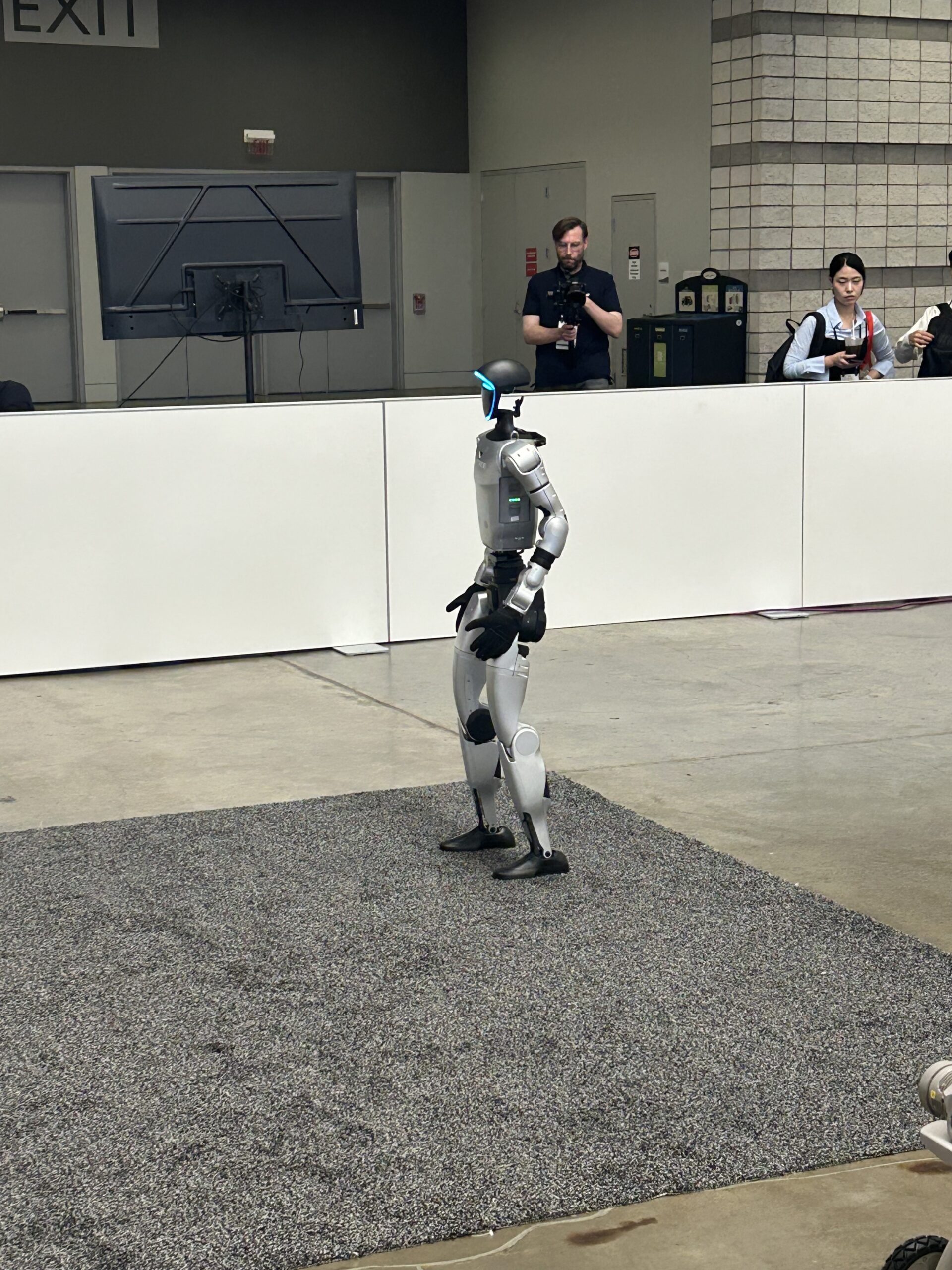
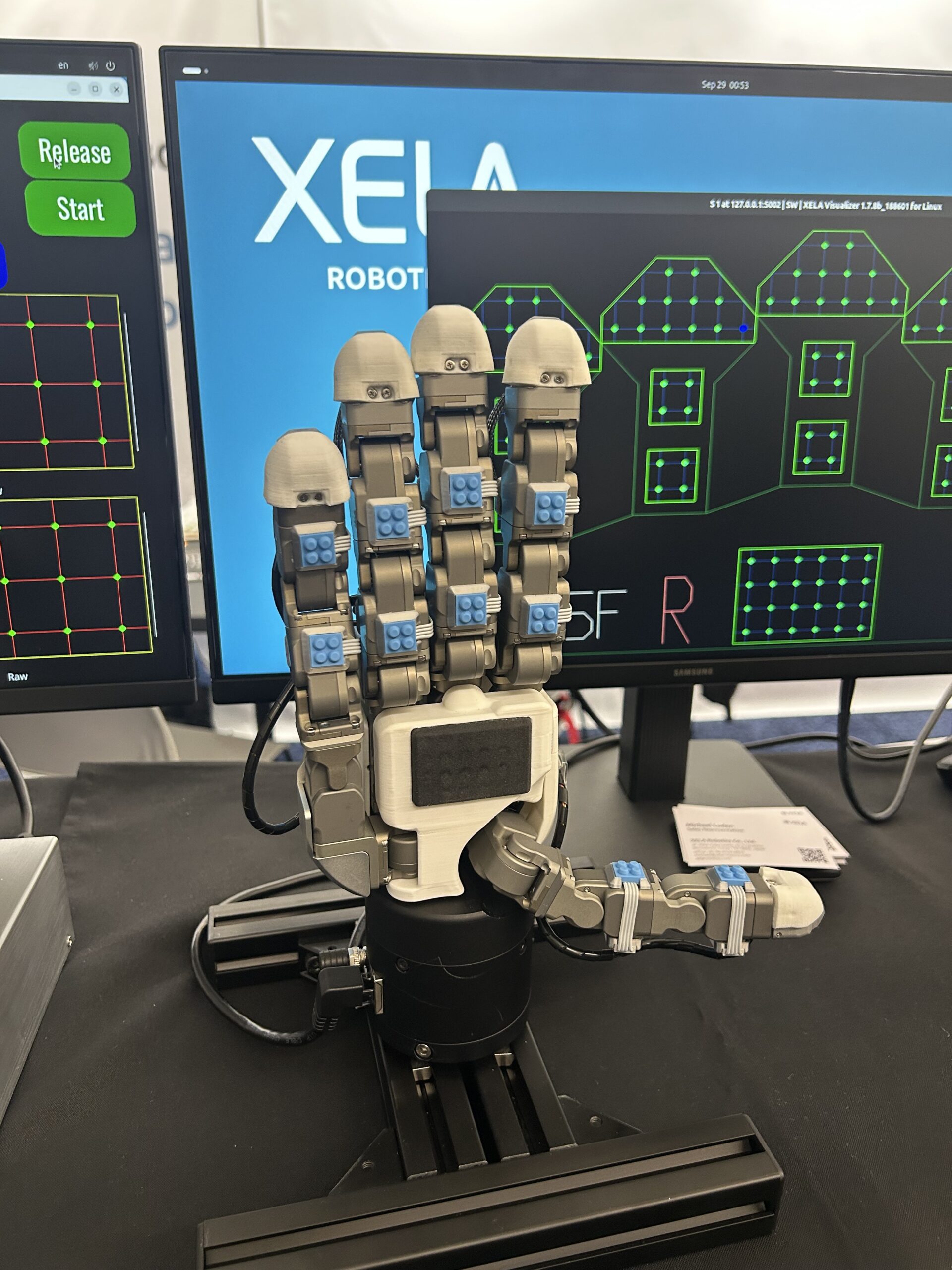
After Lunch (and some before Lunch) I had a chance to check out the exhibit floor. I always enjoy checking out the exhibits to see the current trends in the industry. This year it was a pretty strong trend to humanoids and 5 finger hands. Initially I was going to write about each of the vendors, but there were to many vendors in this space to individually write about. There were full humanoids, top half humanoids, top half humanoids on wheels, humanoids dancing, humanoids doing martial arts, robot dogs, hands with cables, hands with embeded actuators, haptic feedback gloves for the hands, etc..
In addition to the above there were many vendors showing off components to build the above. These include things like modular kits to build humanoids, force sensors, haptic controllers, software to control arms, and more.
Overall I had a great time at IROS 2026 Day 1. Unfortunately I need to miss Day 2, but am looking forward to being back for Day 3. See you there.